
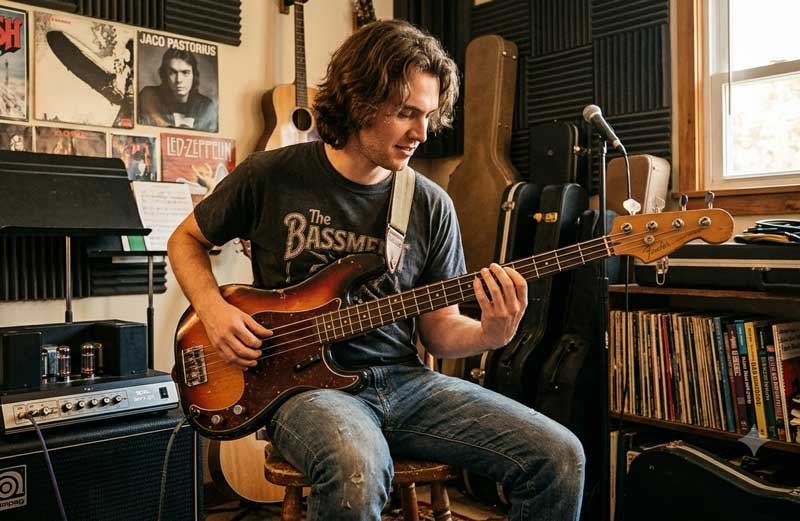
Description
Guitar-Advanced Course Overview
An intermediate bass guitar course bridges the gap between basic mechanical competence and true musicality, shifting the focus from simply playing the right notes to how you play them, creating compelling grooves, and understanding the fretboard inside out.
Key Components of an Intermediate Bass Course
- Advanced Fretboard Mastery
- The Major Scale in Multiple Positions: Moving beyond open position to play major scales across the entire neck using various fingering boxes (CAGED system or 3-notes-per-string).
- Modes: Introducing foundational modes (like Dorian and Mixolydian) to add harmonic color to your basslines.
- Groove, Timing, & Articulation
- Advanced Rhythm & Syncopation: Mastering sixteenth-note grooves, dotted rhythms, and playing around the beat (anticipations and delayed notes).
- Dead Notes & Ghost Notes: Using muted strings to add percussive, funky texture and rhythmic drive.
- Dynamic Control: Developing finger strength and control to accent specific notes and create a dynamic, breathing groove.
- Technique Expansion
- Slap and Pop: Learning thumb slaps, finger pops, and percussive slaps for funk and slap-heavy genres.
- Fingerstyle Endurance: Building speed, stamina, and clean three-finger plucking techniques.
- Walking Basslines: Constructing smooth, connected basslines over jazz and blues chord changes using chromatic approaches and target notes.
- Harmony & Bassline Construction
- Chord Tones & Arpeggios: Moving past simple root notes to outline major, minor, dominant 7th, and minor 7th chords.
- Rhythmic Variations: Taking a simple chord progression and writing multiple unique basslines for it across different genres (funk, rock, R&B, pop).
- Ear Training & Collaboration
- Transcribing by Ear: Learning how to listen to songs and figure out basslines without relying on tabs.
- Locking with the Drummer: Deepening the understanding of the rhythm section relationship (the pocket) and interacting with the kick drum.
What to Look for in a Intermediate Course
- Practical Application: Courses that don’t just teach theory on paper, but show you how to apply concepts directly to backing tracks and real-world songs.
- Genre Diversity: Exposure to multiple styles (funk, R&B, jazz, rock) to expand your musical vocabulary.
- Transcription Breakdowns: Step-by-step guidance on how to analyze and play iconic intermediate-level basslines by ear.


Reviews
There are no reviews yet.